





Tinted SPF Isn't Just Prettier. It's a Different Category of Protection Entirely.
The spectrum your sunscreen ignores — and why it's responsible for the pigmentation that won't budge no matter what you do.
You upgraded your SPF. You went mineral. You reapply. You spent winter treating dark spots with everything the evidence supports — vitamin C, retinol, the good acids. And yet here we are in April, and the pigmentation is already back. The melasma that faded over winter is waking up again. The uneven tone you corrected is resetting.
This is not your routine failing. This is your sunscreen's blind spot — and it covers nearly half the solar spectrum hitting your face right now.

The Half of the Sun Nobody Talks About
The entire conversation around sun protection has been built around one thing: ultraviolet radiation. UVB burns. UVA ages. Broad-spectrum covers both. This framing has dominated photoprotection for decades. It is also profoundly incomplete.
Solar radiation reaching your skin is divided into three distinct bands: 5–7% ultraviolet, 45% visible light, and 48–50% infrared. Every sunscreen conversation you have ever had — every SPF number, every mineral vs. chemical debate, every broad-spectrum claim — has been about that 5–7%. The remaining 45%, visible light, the wavelengths your eyes actually register as color and brightness, has been almost entirely ignored by the protection industry. Until very recently.
Research published in Photodermatology, Photoimmunology & Photomedicine in 2025 confirms what dermatology has been assembling evidence for over a decade: visible light is not benign. It triggers hyperpigmentation through a completely separate biological mechanism than UV — one that standard SPF, even SPF 50+, does absolutely nothing to block. Source
45%
of total solar radiation reaching your skin is visible light. Your sunscreen — however good — was built for the 5–7% that is UV. The rest passes straight through, unblocked.
Solar radiation composition: Journal of Drugs in Dermatology / Frontiers in Pharmacology, 2025
Your Skin Has a Blue Light Receptor. It's Being Activated Every Day.
This is where the science gets genuinely surprising — and genuinely important.
Your melanocytes, the cells responsible for producing pigment, contain a photoreceptor called Opsin 3. It was originally identified in the eye. Researchers then found it expressed directly on the surface of skin cells — specifically in people with Fitzpatrick phototypes III through VI, though blue-green light has been shown to stimulate melanin synthesis across all skin types.
When blue-violet light hits your skin — the high-energy visible band known as HEV light, sitting between 415–455nm and present in both direct sunlight and every LED screen you look at — Opsin 3 activates. It triggers a calcium-dependent signaling cascade through CaMKII, CREB, and MITF, the transcription factor that switches on melanogenesis genes. Tyrosinase activity increases. New melanin is synthesized. And critically, unlike UV-induced pigmentation which peaks and fades, visible light-induced hyperpigmentation is longer-lasting and darker — particularly in medium to deeper skin tones. Source: PMC
47%
of visible light-induced pigmentation forms within 24 hours of exposure — driven by HEV light activating Opsin 3 in your melanocytes. Your mineral SPF 50+ blocks zero percent of this process.
Frontiers in Pharmacology, 2025 — Full study
Your SPF was never designed to touch this. The mechanism doesn't involve UV receptors. It doesn't involve the pathways UV blockers interrupt. It is a completely separate biological event — one that has been happening on your skin every single morning while your "protected" routine watched from the sidelines.
What Clinical Trials Actually Showed
RANDOMIZED CONTROLLED TRIAL
A clinical study published in PMC followed 42 women with melasma through five months of Southern France summer — peak UV and visible light conditions. Half used high-protection broad-spectrum SPF. Half used an identical formula with the addition of visible light filters: iron oxides and pigmentary titanium dioxide.
After five months, both groups maintained melasma stability. But only the tinted sunscreen group showed significant improvement in color uniformity between affected and unaffected skin — the tinted formula wasn't just holding the line, it was actively allowing recovery from existing pigmentation while blocking new formation. Read the full study
JOURNAL OF DRUGS IN DERMATOLOGY
Iron oxide formulations provided superior protection against visible light-induced pigmentation compared to non-tinted mineral SPF 50+, with expert grading and colorimetric measurement confirming the difference was clinically measurable — not theoretical, not marginal. Read the full study
The physics behind why requires one counterintuitive fact: the nanoparticle size that makes modern mineral SPF invisible on skin — the technology behind "no white cast" — is precisely the particle size that loses visible light protection. To block visible light, a formula must be visible on the skin. That is not a cosmetic compromise. It is the physics of photoprotection.
Tinted sunscreens combining iron oxides with pigmentary titanium dioxide block over 93% of high-energy visible light, with darker formulations reaching up to 98%. Source. Your clear SPF 50 blocks zero percent of this spectrum. These are not comparable products. They are different categories.
The Biohacking Layer
If you approach your skin as a long-term biological investment — which is the only framework that actually produces results — visible light protection changes your entire calculus.
Hyperpigmentation is not cosmetic. It is a surface readout of cumulative oxidative stress and chronic inflammatory signaling at the cellular level. Every melasma flare triggered by HEV exposure, every post-inflammatory dark spot that deepens through April, every sun spot that darkens faster than your treatments can fade it — these are actual biological events. Melanogenesis pathways being chronically upregulated. Reactive oxygen species accumulating. Cellular stress responses firing day after day with no adequate counter-signal.
Blocking visible light reduces that daily inflammatory load. It gives your repair mechanisms — your antioxidant enzyme systems, your DNA repair pathways, your NAD+-dependent sirtuin activity — a real chance rather than a constant losing battle.
BIOHACK — THE COMPLETE MORNING STACK
Build Protection That Covers the Full Spectrum
Step 1 — Vitamin C first. Ascorbic acid neutralizes free radicals generated by both UV and HEV exposure. Research published in Frontiers in Pharmacology confirms vitamin C reduces HEV-induced oxidative stress even where SPF coverage is incomplete. Apply before SPF, always. Source
Step 2 — Tinted mineral SPF. Iron oxides confirmed in ingredient list (CI 77491, CI 77492, CI 77499). Broad-spectrum UV coverage. No oxybenzone — a chemical filter with documented endocrine disruption concerns at systemic exposure levels. "Broad spectrum" on a label legally guarantees UV only. Visible light has no regulatory standard yet.
Step 3 — Midday reapplication. Chemical filters degrade under UV exposure in approximately two hours. Mineral filters are more photostable but physically rub off. A tinted SPF powder makes reapplication realistic without disrupting makeup.
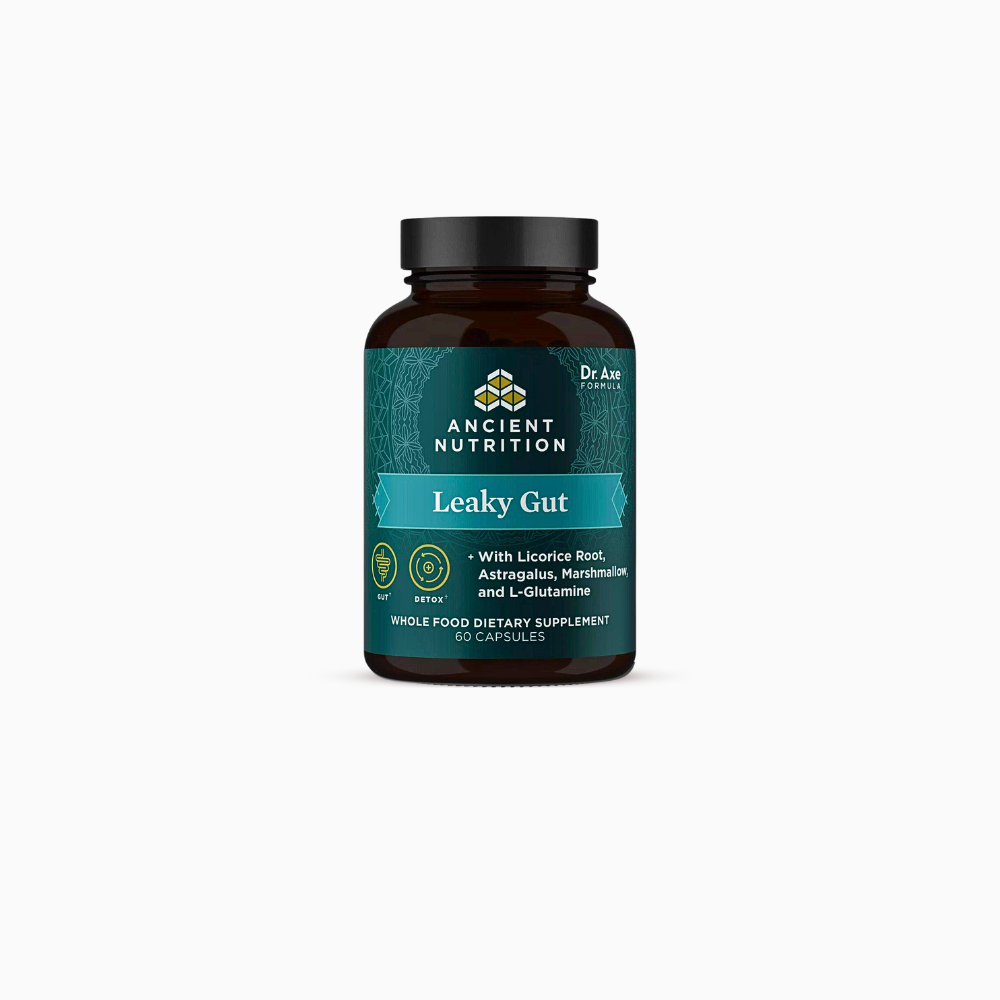
Step 4 — Internal support. Polypodium leucotomos extract — a fern-derived oral supplement with peer-reviewed clinical evidence for reducing UV and visible light-induced pigmentation from within. It works upstream, reducing the inflammatory response to light exposure before it reaches your melanocytes.
The Screen Variable Nobody Is Accounting For
One more input that changes the equation significantly: your devices. LED screens — phones, monitors, tablets — emit blue light in the HEV range. Indoor screen exposure is lower intensity than outdoor solar HEV, but it is continuous and uninterrupted. Eight to ten hours daily at close proximity adds up to a cumulative HEV dose that is not trivial.
The Opsin 3 mechanism does not distinguish the source. Blue light is blue light. The cascade that triggers melanogenesis when you're walking in April sunlight is the same cascade that fires when you're three hours into a screen session indoors. Dermatology Times

What to Actually Look For on a Label
The Tinted SPF Checklist
- Iron oxides — listed as ferric oxide, CI 77491, CI 77492, CI 77499. All three combined give the broadest HEV coverage.
- Pigmentary titanium dioxide — distinct from nano TiO2 used in clear formulas. Larger particle size = visible light scattering ability.
- Broad-spectrum UV coverage — both UVA and UVB confirmed.
- No oxybenzone or octinoxate — chemical filters with systemic absorption and documented hormone-disruption concerns.
- Antioxidant actives — vitamin C, vitamin E, niacinamide.
- Shade depth matters — darker tints with higher iron oxide concentrations block more HEV. For lighter skin tones without a shade match, layering mineral SPF under iron oxide-containing foundation achieves similar coverage. Source

IMAGE Skincare DAILY PREVENTION sun serum tinted SPF 30
"Tinted sunscreen is not a cosmetically convenient option for people who want light coverage. It is the only currently available topical solution for visible light-induced hyperpigmentation."
The Bottom Line
Your SPF is not protecting you from half the light hitting your face. That is not alarmism — it is physics, it is published peer-reviewed clinical research, and it is a gap the photoprotection industry is only now beginning to address with genuine urgency.
Iron oxides close that gap. They only exist in tinted formulas. And the physics of visible light protection means that will always be true — a formula that disappears on skin cannot scatter the light that your clear SPF lets through.
April light looks gentle. Visible light is present year-round, at every latitude, indoors and out, through every window and off every screen. If your SPF doesn't contain iron oxides, it has a blind spot the size of half the solar spectrum. Close it.
Shop Tinted SPF

Written by Evgeniia Yeroshkina
Writes about wellness, daily movement, and clean nutrition. Outside of editing, you can find her drinking too much iced coffee, running, or walking her dog.