




NAD+: The Molecule Your Cells Are Running Out Of
NAD+ is in every cell in your body. It powers your energy, your DNA repair, your skin's ability to actually renew itself. And by your mid-thirties, you've already lost a significant chunk of it. Here's what that means — and what actually moves the needle.

Photo courtesy of Vogue
Something is happening inside your cells that no serum can fix from the outside. It's quiet, it's gradual, and it starts earlier than most people think. By the time the first fine lines show up, the biology behind them has been shifting for years — and at the center of that shift is a molecule called NAD+.
You've probably seen it in longevity circles, on IV drip menus, in the supplement aisles. And yes, there's real hype around it. But there's also real science — decades of it — and the more researchers dig into NAD+, the harder it becomes to dismiss. This is not another wellness trend built on vibes. This one has a mechanism.
So what is it, exactly?
NAD+ stands for nicotinamide adenine dinucleotide. (You'll never need to say that again.) It's a coenzyme — a helper molecule that your cells use to do some of their most essential jobs: producing energy, repairing damaged DNA, and running a family of proteins called sirtuins that essentially govern how gracefully your cells age.
Think of it as your cells' operating currency. Without enough of it, things start to slow down, break down, and show up on your face.
Here's the part that matters: NAD+ levels drop roughly 60% between early and late adulthood. Not a little. Not negligibly. More than half. And your skin, which is constantly exposed to UV radiation and environmental stress, pays a particularly steep price.
What's actually happening in your skin
Every day, UV light, pollution, and the general chaos of being alive leave behind tiny pieces of DNA damage in your skin cells. Your body has repair enzymes — called PARPs — whose entire job is to fix that damage. The catch: they consume NAD+ to do it. When your NAD+ reserves are solid, repairs happen fast and clean. When they're depleted — which becomes increasingly common as you age — the damage starts to accumulate. Cells stop dividing as cleanly. Skin loses its ability to renew itself the way it once did.
At the same time, the fibroblasts deep in your dermis — the cells responsible for producing collagen and elastin — need energy to do their jobs. That energy comes from your mitochondria. And your mitochondria run on NAD+. Less NAD+ means less mitochondrial output, which means slower collagen synthesis, which means the structural scaffolding of your skin quietly starts to thin.
This is why skin aging isn't just a surface problem. The lines and the loss of firmness are the end result of something that starts at the cellular level, years earlier.
Why depletion accelerates with age (it's not just time)
Here's where it gets interesting — and a little maddening. NAD+ doesn't just decline because your cells produce less of it. It declines because certain enzymes start consuming more of it.
As oxidative damage builds up over time, enzymes called PARPs, CD38, and SARM1 ramp up their activity — using NAD+ to handle DNA repair, inflammation, and cellular stress. It's your body doing its job. But the drain outpaces the supply. The result is a depletion loop: the older you get, the more these enzymes activate, the faster NAD+ disappears, and the harder it becomes for cells to keep up.
Your skin, with its constant UV exposure, sits at the front line of this. Every unprotected minute in the sun is, at the cellular level, a NAD+ depletion event.
The sirtuin connection (the part the longevity crowd is obsessed with)
There's a family of proteins called sirtuins — sometimes referred to as longevity genes — and they regulate some of the most critical processes in biological aging: suppressing inflammation, coordinating DNA repair, maintaining the stability of your genetic expression. All seven of them run on NAD+.
When NAD+ falls, sirtuin activity falls with it. And in skin, this has a direct, visible downstream effect. Fibroblasts start underperforming. The skin's surface cells turn over more slowly. Barrier function weakens. The result is that particular flatness and dullness that doesn't respond to hydration — because the problem isn't at the surface. It's in the machinery underneath.
Analysis of human skin samples has shown approximately a 70% decline in NAD+ levels from early adulthood onward. Seventy percent. And that number maps almost precisely onto the trajectory of collagen loss and skin renewal slowdown that most people experience.
What actually helps
There are a few real levers here — and it helps to know which ones do what.
Topical niacinamide (vitamin B3) is the most accessible, most evidence-backed NAD+ move for skin — an NAD+ precursor that works at the surface, supporting cellular energy and DNA repair locally. The clinical research is solid: consistent use improves hydration, reduces fine lines, and strengthens the barrier.

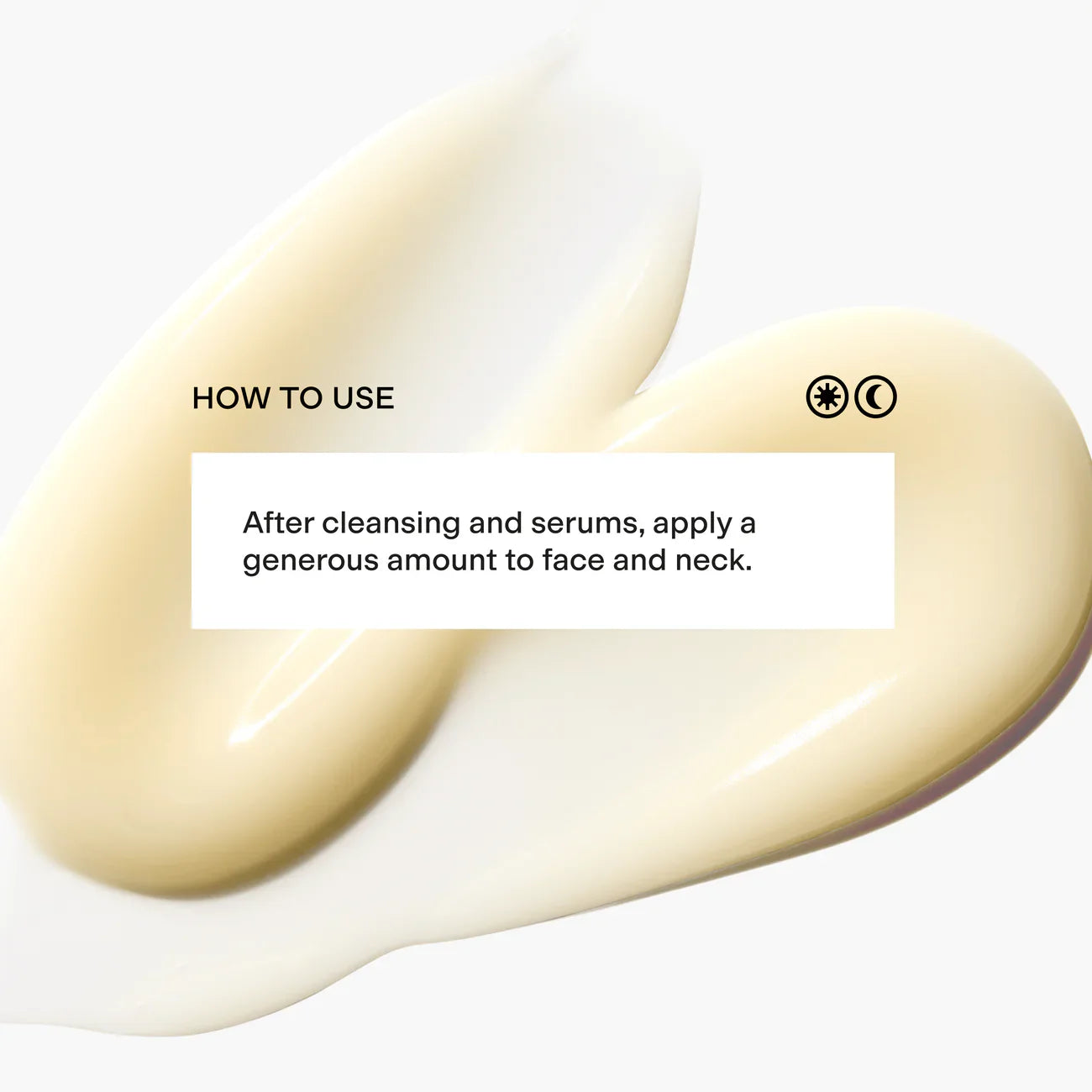
The Outset's Restorative Niacinamide Night Cream applies this at the most strategic moment — overnight, when skin is in active repair mode and cellular turnover peaks. The formula pairs niacinamide with bakuchiol (a retinol alternative that supports collagen without the irritation), evening primrose oil, and the brand's Hyaluroset™ botanical complex. All of it working while you sleep, which is exactly when your cells are most receptive to it.
Go systemic with NAD+ directly. Topical is a start. But addressing the deeper depletion — the one happening in your mitochondria, your fibroblasts, your DNA repair enzymes — requires working from the inside.

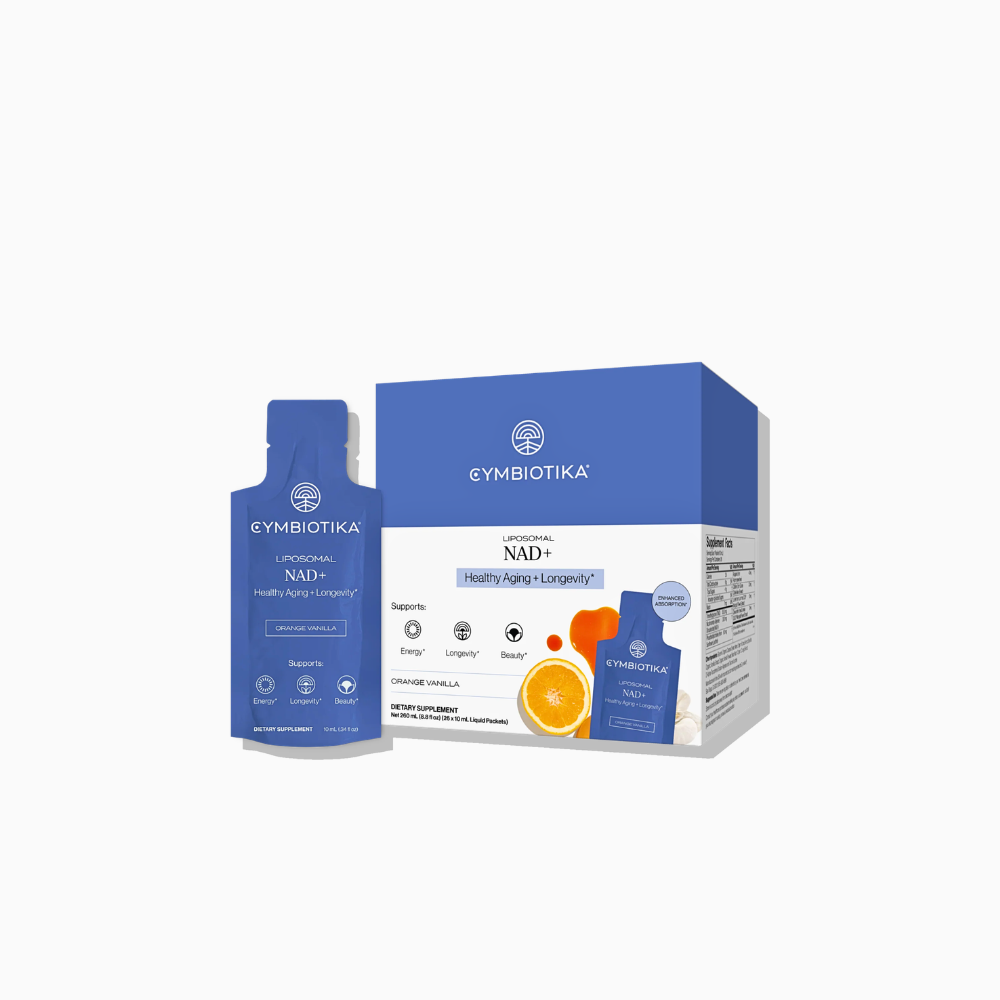
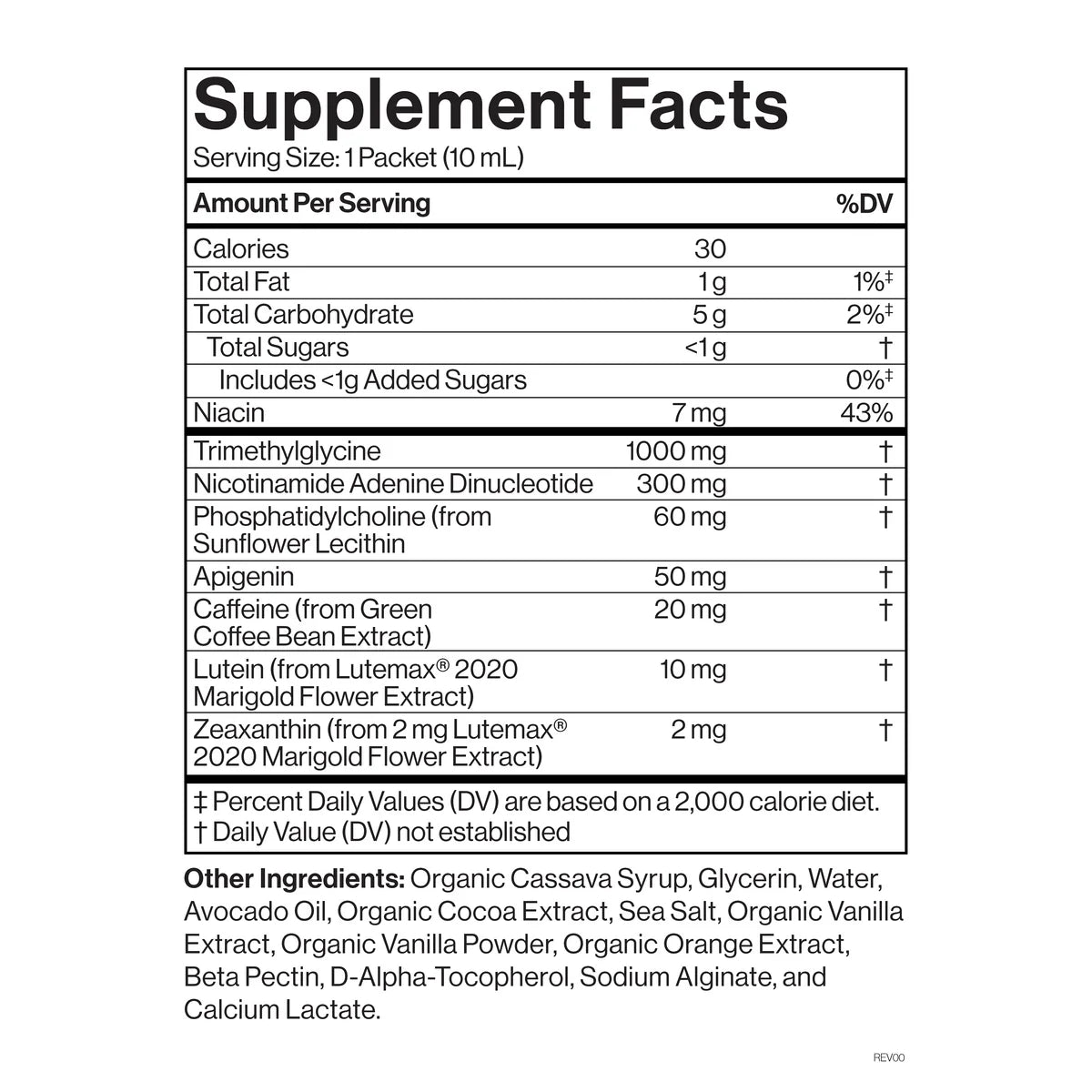
Cymbiotika's Liposomal NAD+ delivers NAD+ via liposomal encapsulation, protecting the molecule from degradation in the gut and significantly improving absorption. The formula also includes apigenin — the same CD38 inhibitor — plus niacin and trimethylglycine, supporting the full recycling pathway rather than just supplementing a single molecule. A randomized, double-blind trial found that NAD+ precursor supplementation for 6–12 weeks significantly elevated NAD+and metabolite concentrations in adults, with no adverse effects. The delivery method is what makes the difference between that working and not.
Blocking the drain, not just filling the tank. Certain natural flavonoids — apigenin and quercetin — inhibit CD38, one of the main enzymes that overconsumes NAD+ as you age. Cymbiotika's formula already includes apigenin for this reason. Think of it as patching the leak while refilling the tank simultaneously.
Movement. Resistance training and zone 2 cardio both upregulate NAMPT — the enzyme at the center of the NAD+ salvage pathway. Not just circulation. Cellular chemistry.
Intermittent fasting. Time-restricted eating increases sirtuin activity, which depends on NAD+. One of the most researched longevity interventions we have, and the skin biology tracks directly.
Sunscreen — reframed as a cellular decision. Every unprotected UV hit is a NAD+ depletion event. PARPs consume NAD+ to repair UV damage. That makes SPF less of a cosmetic habit and more of a preservation strategy. IMAGE Skincare's Daily Prevention Hydrating Moisturizer SPF 30 uses pure mineral zinc oxide — no oxybenzone, no chemical filters — with proprietary XOSM™ technology that keeps the SPF on the surface while actively driving antioxidants like vitamin C and astaxanthin deeper into skin. Protection and repair, not just one or the other.
The honest take
The science on NAD+ is real. The mechanism is established. What's still evolving is the clinical evidence on exactly how much supplementation translates to visible, measurable skin improvements in humans — because those trials take time, and most of the most rigorous ones are ongoing.
What we know: the decline is real, the consequences are real, and the tools to address it are better than they've ever been. A clean, barrier-respecting cleanse as your foundation. Niacinamide working at the surface. Liposomal NAD+ working systemically. Mineral SPF protecting what all of the above is trying to build. Each layer has a job. None of them work as well without the others.
Your cells are running a system. The more you understand it, the better you can support it.
Related Reading
- What Are Zombie Cells and Why Are They Breaking Down Your Collagen?
- Tinted SPF Isn't Just Prettier. It's a Different Category of Protection Entirely
- How to Stop Your Neck from Aging Faster Than Your Face
- Gut-Skin Axis Reset: The Exact Foods to Repair Your Skin Barrier
- Top 5 Anti-Aging Ingredients for Facial Care

Written by Anastasiia Zhornikova
Writes about wellness, daily movement, and clean nutrition. Outside of editing, you can find her drinking too much iced coffee, running, or walking her dog.