





Is Body Longevity a New Trend? (and how to hack it right)
The most data-obsessed people in beauty have spent years optimizing a face routine while quietly ignoring the one part of them that ages first.
There's a strange blind spot in even the most disciplined skincare routines. Someone tracking their HRV, fasting windows, and retinol percentage with spreadsheet-level precision will still, without thinking, slap body lotion on like it's an afterthought. The face gets the lab-grade actives. The neck, chest, and hands get whatever's left in the bottle.
That gap is starting to close, and not because of a new product launch — because the biohacking mindset has finally turned its attention south. The same people optimizing sleep scores and continuous glucose monitors are realizing that "longevity" stops being a coherent strategy the moment it stops at the jawline.

Why this part of you ages first?
It isn't bad luck. The skin on the neck, chest, and back of the hands is thinner than facial skin, has fewer oil glands to keep it lubricated, and lacks the underlying muscle structure that helps hold facial skin in place. Add near-constant phone-scrolling posture and decades of sunscreen that stopped at the chin, and the math catches up early. Collagen production itself starts declining at roughly 1% per year after age 20, according to Scientific American — a slow leak that's already been running for over a decade before most people think to address it anywhere but their face.
The barrier is the actual story
Before retinol, before peptides, before anything more ambitious — the skin's ability to hold onto water is what determines how everything else performs.
Ceramides make up roughly half the lipid content of the skin's outer layer, and a 2024 clinical trial published in Cosmoderma found that topical ceramide formulas kept skin meaningfully more hydrated for up to 24 hours after a single application. Hyaluronic acid, the other half of that equation, can hold up to six liters of water per gram.
For the neck and décolletage specifically — the area that shows damage soonest — that combination is doing more work than any "anti-aging" claim on a label. Neocutis Neo Firm Neck & Décolleté Tightening Cream ($142) and Perricone MD Cold Plasma Plus+ Neck & Chest SPF 25 ($95) both lean on this logic, layering peptides and antioxidants into a barrier-supportive base. The built-in SPF 25 on the Perricone formula is a nice bonus for a treatment product, but it sits below the broad-spectrum SPF 30 that the American Academy of Dermatology considers the daily minimum — so treat it as a finishing step over a proper SPF 30+, not a replacement for one, especially on a part of the body that accumulates sun exposure faster than almost anywhere else.
Biohacking doesn't stop at the skin's surface
If you're already the type to ask whether a supplement is actually absorbed rather than just expensively excreted, vitamin C is a useful case study.
A 2024 randomized, double-blind trial found that liposomal delivery significantly increased vitamin C absorption into plasma and immune cells compared to the standard form, and a separate crossover study clocked roughly a 30% increase in bioavailability with liposomal encapsulation (MDPI, 2024).

Since vitamin C is a required cofactor for collagen synthesis, that absorption gap isn't trivial — it's the difference between a supplement that does something and one that mostly passes through. Cymbiotika Liposomal Vitamin C ($62) is built around exactly that delivery method.
Then there's the genuinely strange frontier
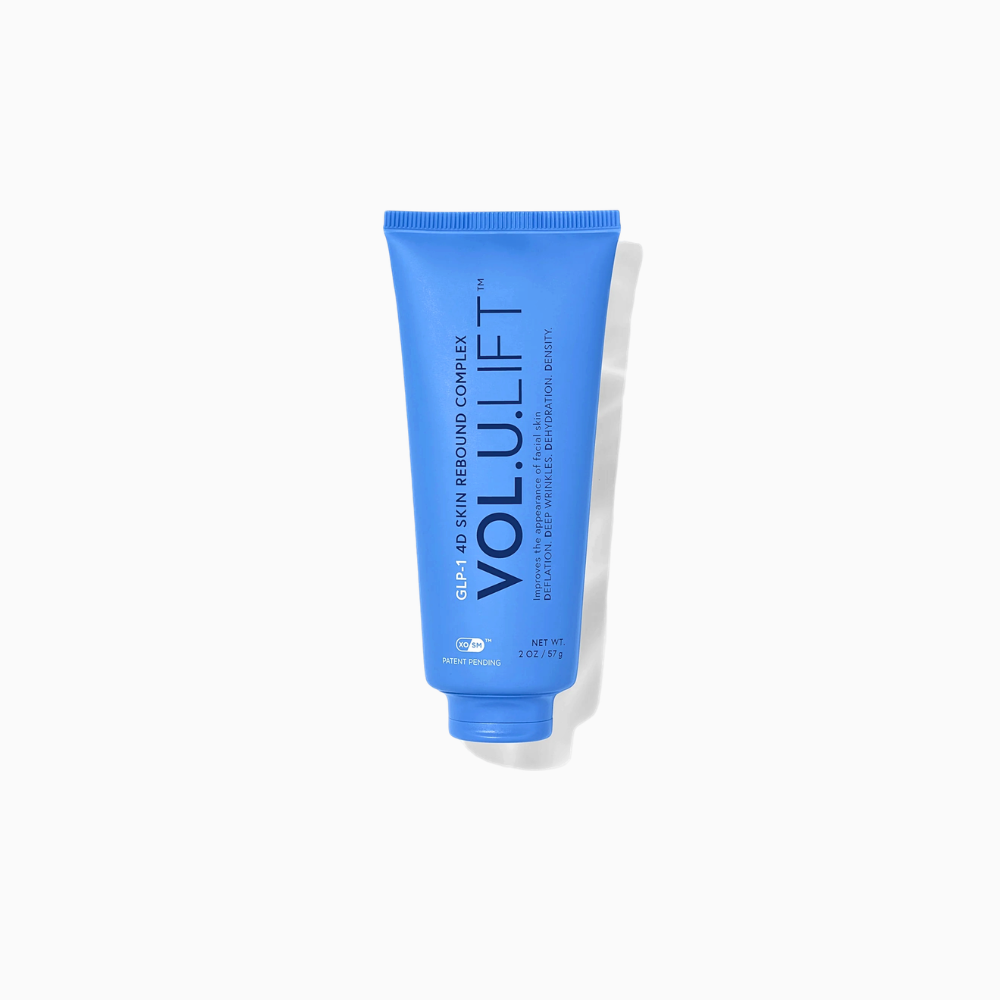
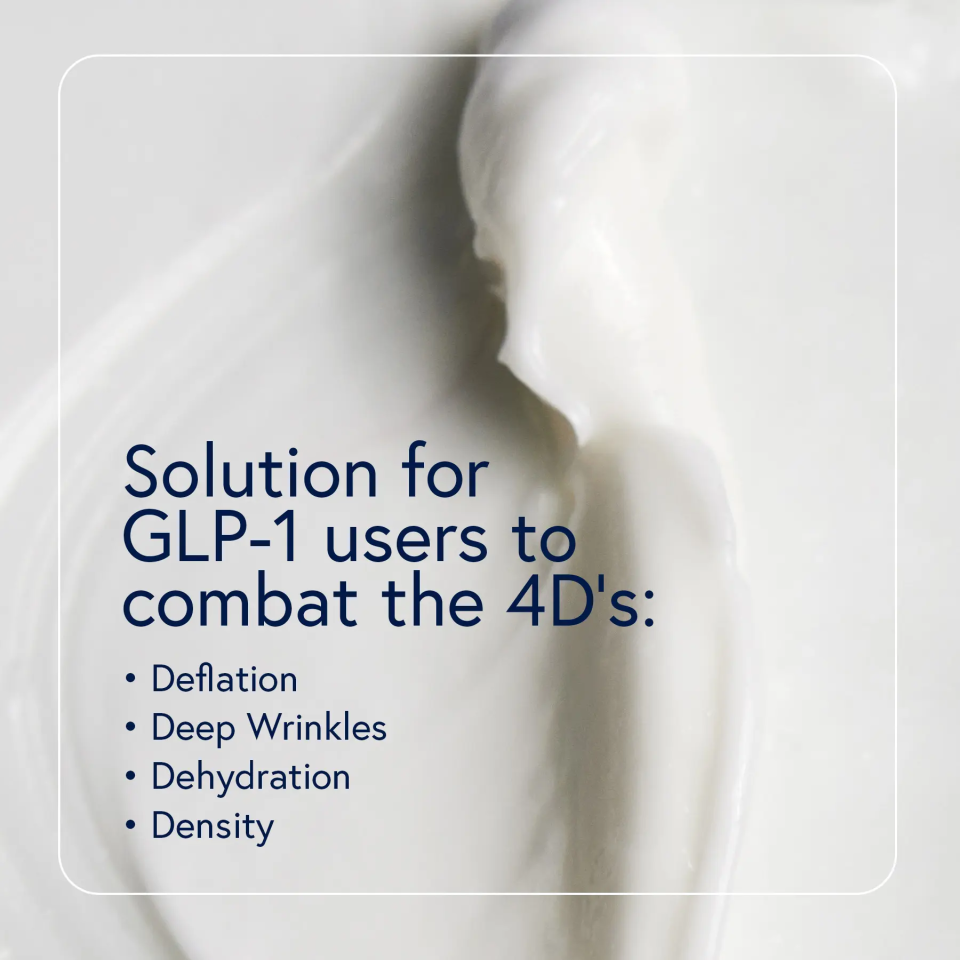
Exosomes were the ingredient everyone Googled and few understood; biosomes are the lab-engineered answer to the obvious follow-up question — can you replicate that cell-signaling effect without using human-derived material at all? Biosomes are synthetic nanoparticles designed to mimic the way natural exosomes prompt skin to ramp up its own collagen and elastin production, with more batch-to-batch consistencythan anything pulled from variable human tissue. It's the kind of "instructional" skincare — telling skin what to do rather than just sitting on top of it — that the biohacking crowd tends to find irresistible, and it shows up in formulas like AnteAGE Barrier Repair with Biosomes Moisturizer ($130). Meanwhile, the metabolic-science buzz from GLP-1 has made its way into topical formulas too, with products like IMAGE Skincare VOL.U.LIFT™ GLP-1 4D Skin Rebound Complex ($134) borrowing the language — and some of the underlying skin-laxity targeting — from a conversation that started in weight loss.
None of this requires a ten-step routine or a second skincare cabinet. It requires admitting that the body has been aging this whole time, mostly unsupervised, while all the attention went somewhere else. The biohacking instinct isn't really about chasing the newest ingredient — it's about refusing to leave any part of yourself unexamined. The neck and chest have been waiting their turn for a while now.
Related Reading
-
A Facelift Without Surgery: A Plastic Surgeon’s Solution
- NAD+: The Molecule Your Cells Are Running Out Of

Written by Anastasiia Zhornikova
Writes about wellness, daily movement, and clean nutrition. Outside of editing, you can find her drinking too much iced coffee, running, or walking her dog.