




How to Fix Ozempic Face and Body: Dermatologists Recommendation
The number on the scale is finally where you wanted it. And then you catch yourself in a mirror and something's off — cheeks a little hollow, under-eyes a little tired-looking, maybe an unfamiliar softness on your arms or stomach that wasn't there even when you weighed more. If you've typed "how to fix Ozempic face" into Google at midnight, you're not alone: search interest in the term has risen more than 4,600 percent in just a few years, and it's become common enough that dermatologists now bring it up unprompted with patients starting a GLP-1.

Why This Happens
It's not the medication attacking your skin directly. It's speed. Facial fat compartments — the padding in your temples, cheeks, and under your eyes that keeps a face looking full — shrink in step with total body fat, and they shrink fast when the weight comes off fast. A 2025 analysis out of Vanderbilt found that midface volume drops by roughly 9 percent for every 10 kilograms lost, which starts to explain why the change can feel so sudden and so visible even when the rest of your health metrics are trending the right way.
Dermatologist Jane Yoo, MD, is careful about the terminology: "The phenomenon is real. The name is imprecise. What patients are experiencing is not usually understood as a direct damaging effect of the medication on the skin. It is primarily related to weight loss, specifically the speed and amount of fat loss from the face." She notes that age changes the picture significantly — a 32-year-old losing 40 pounds on semaglutide may barely notice facial changes, while a 52-year-old losing the same amount, with less baseline collagen and elasticity to begin with, often sees far more hollowing and laxity along the jawline.
There may be a second layer to this, too. A 2025 review in the journal Endocrine found that GLP-1 receptors sit directly on skin's own fibroblasts and adipose-derived stem cells — and that stimulating those receptors seems to reduce the cells' ability to produce the protective compounds that keep skin resilient. It's early, developing research rather than settled fact, but it's one possible reason some people's skin changes seem to outpace what fat loss alone would predict, and why researchers are increasingly describing this as a two-part mechanism rather than volume loss alone.
Who Notices It Most
Not everyone on a GLP-1 develops noticeable facial or body changes, and the research points to a fairly consistent set of risk factors: age over 40, a larger total amount of weight lost, a faster pace of loss, and lower starting collagen density — which is itself influenced by prior sun exposure, genetics, and smoking history. Dermatologist Sabrina Fabi, MD, a clinical professor at UC San Diego, notes that "many factors, not just rapid weight loss, influence facial appearance after GLP-1 treatment" — meaning two people losing the same amount of weight on the same medication can end up with very different results. This is part of why a one-size-fits-all timeline doesn't really exist here; what does exist is a consistent set of levers that help regardless of your starting point.
Does Ozempic Face Go Away on Its Own?
For a lot of people, partially, yes — this is soft tissue adjusting to a new structure underneath, not permanent damage. But "partially" and "eventually" aren't especially satisfying answers when you're looking in the mirror today, and full spontaneous reversal isn't guaranteed for everyone. It depends heavily on age, genetics, how much weight was lost, how fast, and your skin's baseline elasticity going in. The honest reframe here: this isn't something to just wait out passively. It's something you can actively support, whether you're mid-journey or years past your GLP-1 use.
Is Ozempic Face Reversible?
Mostly, in the sense that it's not a fixed, permanent state — but "reversible" looks different depending on severity. Mild-to-moderate volume loss and skin laxity often improve meaningfully with time, consistent skincare, and the fundamentals below. More significant hollowing typically needs an in-office intervention — filler or a biostimulator like Sculptra — to restore what skincare alone can't rebuild. Facial plastic surgeon Michael Somenek, MD, who studies aesthetic outcomes in GLP-1 patients, is direct about the emotional side of this: "These patients have a new sense of confidence in their body. Their face is showing that change, but not in a positive way." Knowing where you sit on that spectrum — mild adjustment versus significant volume loss — is the useful first step before deciding what kind of help makes sense.
It's Not Just Your Face: What's Going On With "Ozempic Body"
Same mechanism, different real estate: arms, stomach, inner thighs, under the chin. Fat acts as scaffolding under skin, and when it disappears quickly, skin that spent months or years stretching to accommodate it doesn't have time to spring back — hence the crepey, thinner texture so many people notice post-weight-loss, sometimes discussed online as "Ozempic body" or "Ozempic butt." Body skin behaves somewhat differently from facial skin in this process: it has fewer oil glands to begin with, which means it's more prone to dehydration during rapid weight change, and the areas under the most tension before weight loss — upper arms, abdomen, inner thighs — tend to show the most visible laxity afterward. The variable that shows up again and again across the research is pace: skin given 12 to 18 months to remodel collagen retracts noticeably better than skin asked to catch up in three to six.

How Do You Tighten Skin After Weight Loss Without Surgery?
This is the question most people are actually asking, and the honest answer is: consistency over any single fix. The non-surgical toolkit dermatologists point to again and again includes adequate protein intake (collagen production runs on amino acids), strength training (to preserve the muscle and tissue tone sitting under the skin), real hydration, and a topical routine built specifically around barrier support and firmness — not just moisturizing for comfort. Some clinicians also point to in-office, non-surgical options like radiofrequency and microneedling for more pronounced laxity, though these work best as a complement to a solid daily routine rather than a replacement for one. None of these individually work fast. Together, consistently, they meaningfully change how skin looks and behaves over months.
Does Hyaluronic Acid Help With Skin Laxity After Weight Loss?
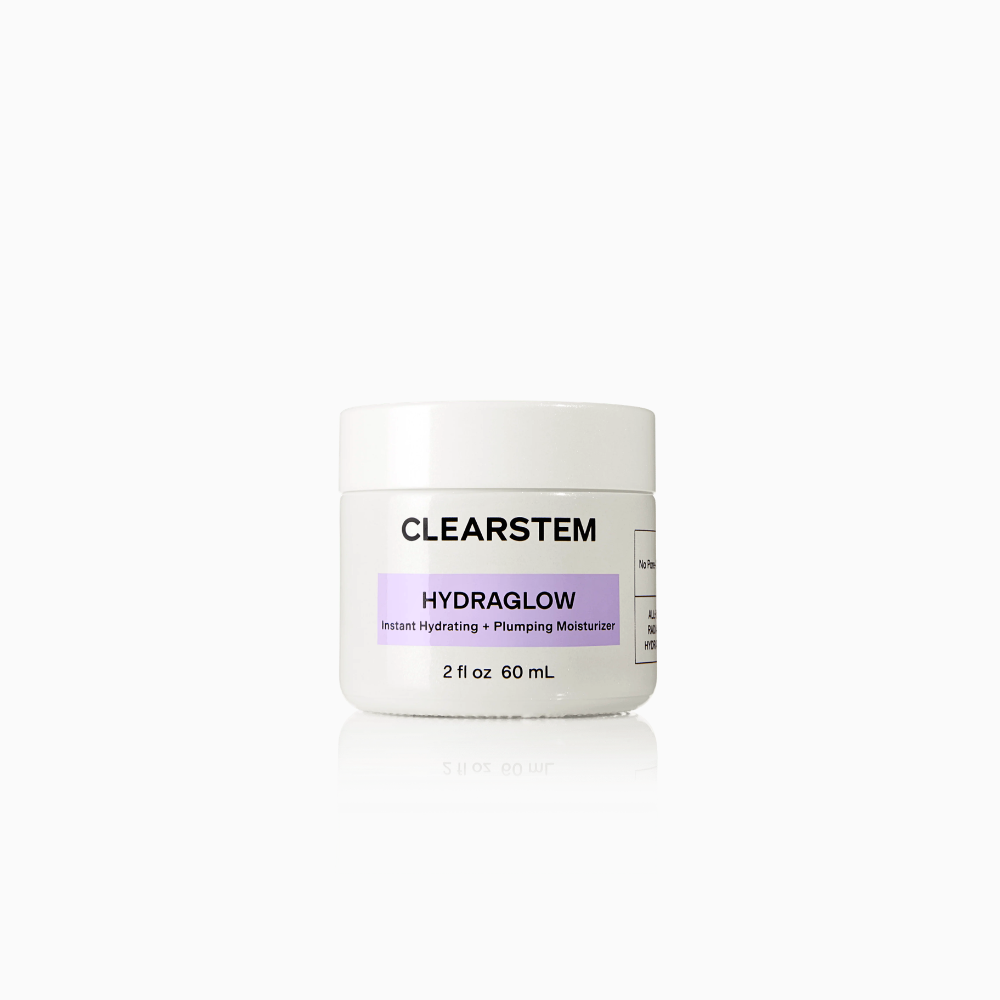
Yes, and it's the ingredient dermatologists return to most often for this exact concern. hyaluronic acid doesn't rebuild a depleted fat pad — nothing topical does that. What it does is draw moisture into skin so it reads as plumper, more resilient, and less crepey from the surface, while the deeper structure is still catching up underneath. It's a surface-level fix for a below-the-surface problem, and for a lot of people, that's genuinely enough to notice a real difference day to day. Newer forms of hyaluronic acid, including HA silanol, are formulated to penetrate more effectively than older HA formulas, which is part of why you'll increasingly see it specified by name rather than just "hyaluronic acid" on newer product labels.
What Helps Crepey Skin After Weight Loss
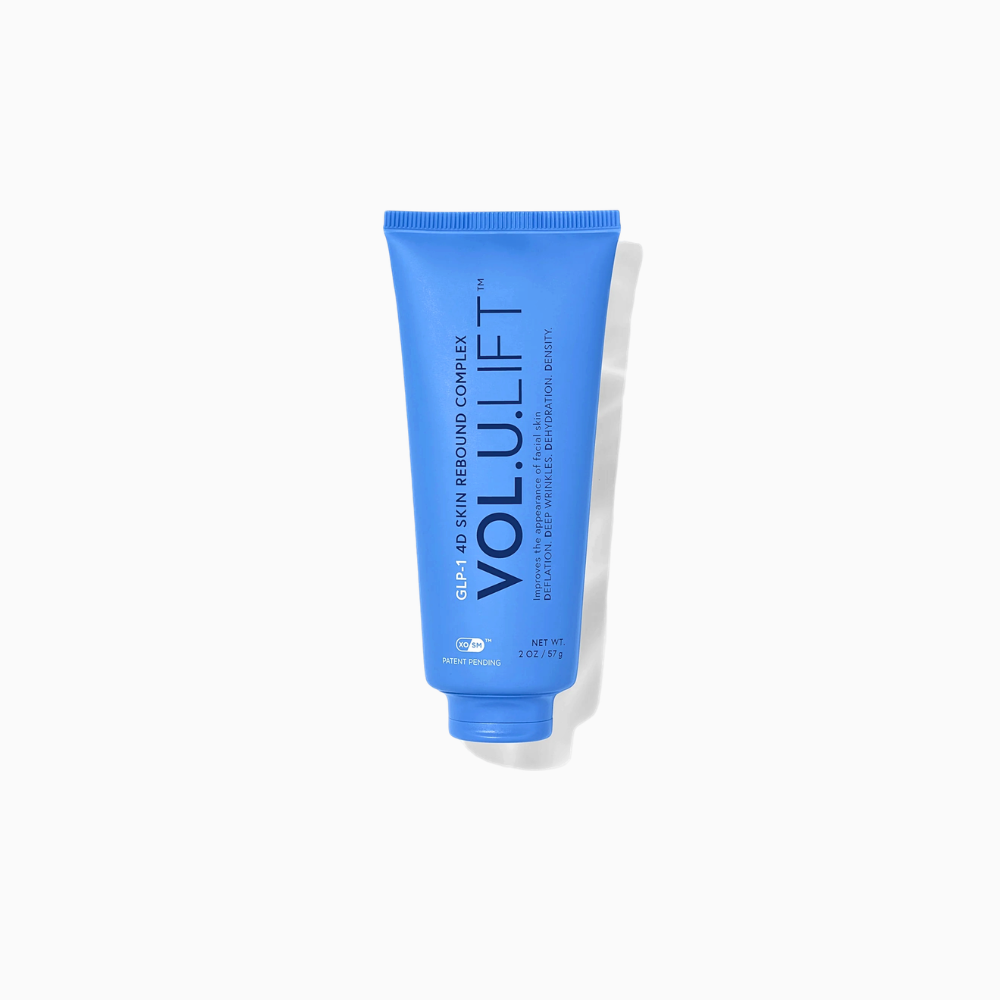
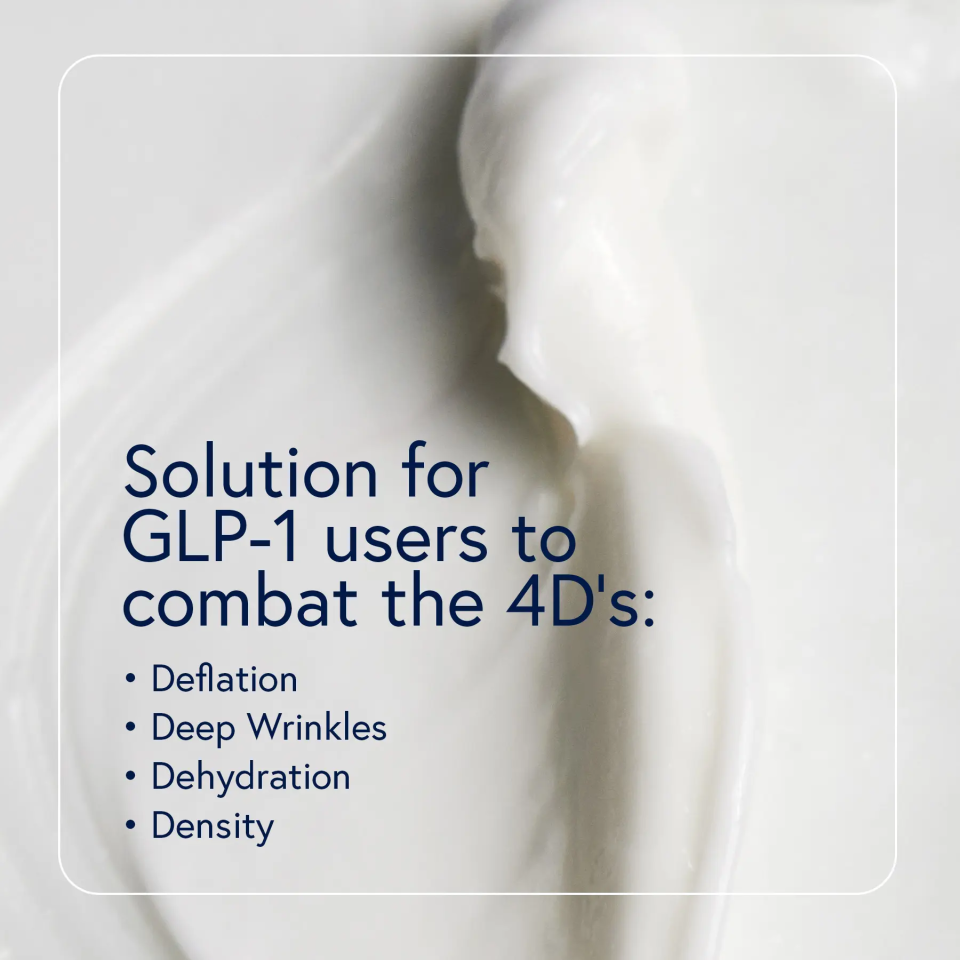
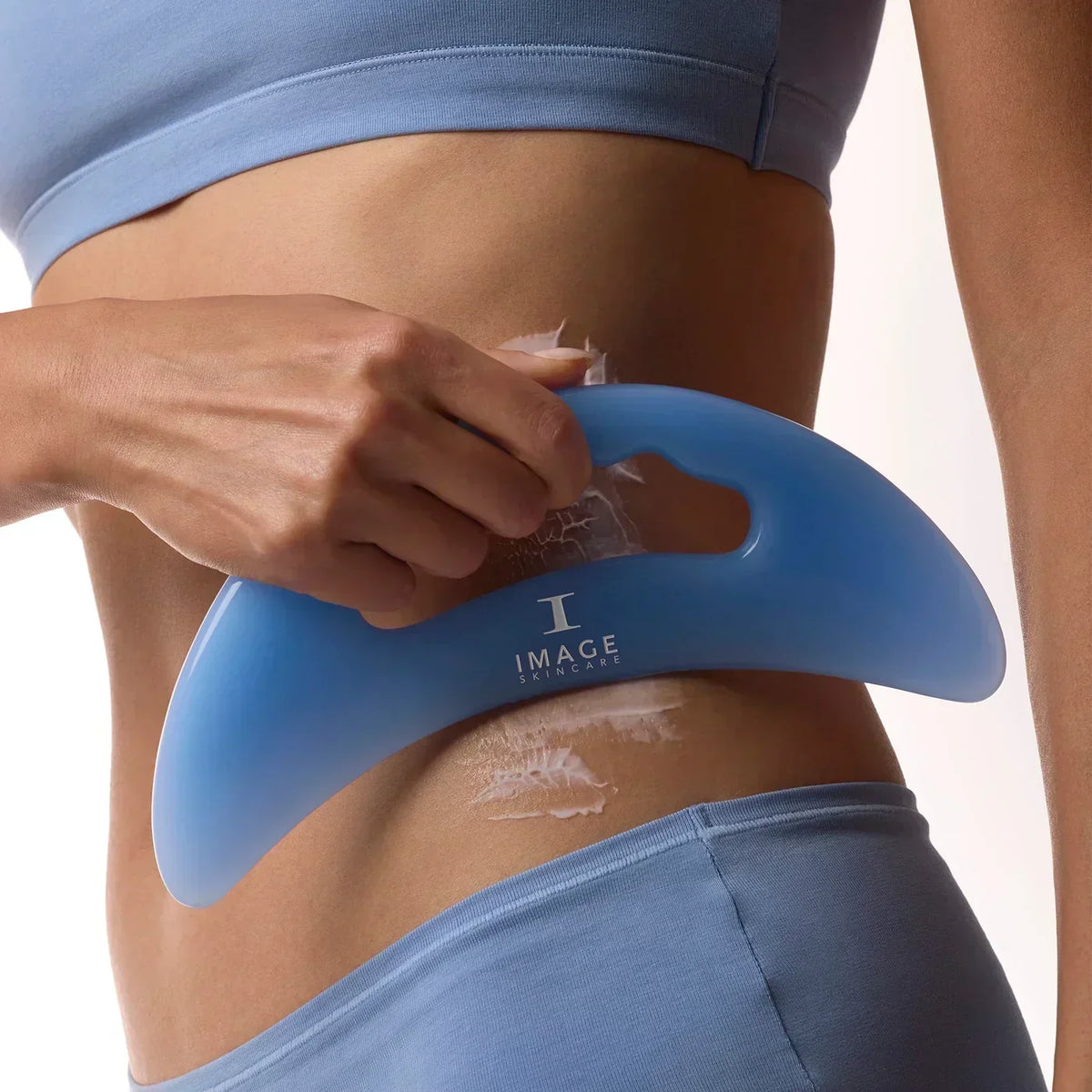
Crepey texture specifically responds well to the combination of hydration (HA is the standout here), gentle barrier-supportive actives like bakuchiol, and consistency — this is not a one-application fix. The skin needs weeks, not days, to visibly plump and smooth. This is exactly the gap IMAGE Skincare's VOL.U.LIFT line was built to close — a plastic surgeon developed it specifically in response to GLP-1-related skin changes rather than repositioning an existing anti-aging formula for the moment. The face treatment centers on next-generation hyaluronic acid, biomimetic plant collagen fragments, and bakuchiol to target what the brand describes as four dimensions of the issue: deflation, deep wrinkles, dehydration, density. Used morning and night, most people notice early movement around four weeks in, with fuller results by twelve. The body formula takes the same approach to arms, abdomen, and thighs — a firming complex built around HA silanol, bakuchiol, and marine bioactives, aimed specifically at the sagging and crepiness that show up wherever fat loss happened fastest.


Neither is a substitute for an in-office procedure if laxity is significant — dermatologists are consistent that injectables and biostimulators remain the right call there. But for the much larger group of people dealing with mild-to-moderate changes, a formula built around the actual mechanism at play, used consistently, is a legitimately reasonable place to start.
 VOL.U.LIFT™ GLP-1 4D Skin Rebound Complex - before and after
What About Filler for Ozempic Face?
For people with more pronounced volume loss, dermatologists and plastic surgeons frequently discuss dermal filler as a direct way to restore the temple, cheek, and under-eye fullness that fat loss took away — it's the one intervention that can genuinely replace lost volume rather than just supporting the skin sitting on top of it. Interest in this combination has grown alongside interest in "Ozempic face" itself, with search data showing a close correlation between the two topics. That said, filler is a procedural decision to make with a qualified injector, not a skincare-aisle one, and most dermatologists frame it as complementary to — not a replacement for — a solid daily skin routine, since filler restores structure but doesn't address the surface-level dehydration and texture changes that skincare specifically targets.
How Do You Prevent Ozempic Face and Body Before It Starts?
If you're still early in a GLP-1 journey, prevention is genuinely more effective than correction after the fact. The clearest, most repeated piece of advice in the dermatology literature: don't wait for changes to show up before you start supporting your skin. A slower, steadier rate of weight loss — where medically appropriate and in coordination with your prescribing provider — gives skin more time to remodel collagen as it goes, rather than being asked to catch up after the fact. Prioritizing protein and strength training from the start preserves the muscle and tissue tone that helps skin sit smoothly in the first place, and starting a supportive skincare routine on day one, rather than waiting for a reason to, gives your skin the best possible head start.
 VOL.U.LIFT BODY - before and after
When Should You Start a Skincare Routine on a GLP-1?
Now, ideally — not once you're already unhappy with what you see. Beginning a supportive routine while you're still losing weight, instead of waiting until changes feel obvious, gives your skin's own remodeling process a head start instead of a deficit to make up later. If you're on a GLP-1 right now and haven't started, today's a reasonable day to begin. If you're further along and already seeing changes, the same principles still apply — just budget a little more patience for the results to show, since skin that's already changed needs more time to visibly respond than skin that was supported from the start.
Common Myths, Cleared Up
Not according to the current evidence. As Dr. Yoo puts it, the changes are "primarily related to weight loss," not a toxic effect of the drug itself — the same facial and body changes show up after any rapid weight loss, including from bariatric surgery, long before GLP-1 medications existed.
Not necessarily, and this is a conversation to have with your prescribing provider rather than a decision to make based on appearance alone — for many people, the health benefits of the medication far outweigh the aesthetic tradeoff, and the skin changes can be actively managed alongside continued treatment.
It can't, and any product claiming otherwise is overselling. What a well-formulated routine can do is meaningfully improve how the skin sitting on top of that lost volume looks and feels — hydration, texture, and firmness — while leaving true volume restoration to procedures designed for that job.
Sometimes, especially in younger patients with strong baseline elasticity. For a lot of people, though, stabilized weight is the starting line for skin recovery, not the finish line — which is exactly why an active, ingredient-driven routine matters even after the number on the scale stops moving.
What to Look for on an Ingredient Label
Beyond hyaluronic acid, a few other ingredients show up consistently in dermatologist recommendations for this specific concern. Peptides — short chains of amino acids that signal skin to behave more like younger, firmer skin — are widely used to support the appearance of firmness over time. Bakuchiol, a plant-derived retinol alternative, offers similar texture-smoothing benefits without some of the irritation that traditional retinol can cause, which matters if your skin is already more sensitive than usual during a period of rapid change. Marine-derived bioactives and botanical extracts are increasingly used in body-specific formulas to support hydration and tone in areas — arms, abdomen, thighs — that have fewer oil glands and dry out more easily than facial skin.
A Realistic Timeline
Patience is part of the plan here, and it's worth setting expectations accordingly. Most dermatologist-recommended routines are framed around a 4-to-12-week window: early improvements in hydration and texture are often visible within the first month, with more noticeable firmness and smoothness developing by the third. This mirrors the general pattern of skin's own collagen remodeling process, which simply doesn't happen overnight regardless of what's applied to it. For more significant volume loss, that timeline is different — filler results are visible immediately, while biostimulators like Sculptra work gradually over a similar multi-month window by encouraging the body's own collagen production.
Is This Different From Normal Aging?
In some meaningful ways, yes. Ordinary aging tends to involve volume loss from the deep fat compartments of the face, developing gradually over years — which is part of why it reads as a slow, expected change. The volume loss associated with rapid weight loss tends to hit the superficial fat layer, and it happens over months rather than years, which is likely why it can feel so much more sudden and disorienting even though the underlying tissue mechanics — less fat, less structural support, more visible skin laxity — overlap significantly with what eventually happens to everyone's face over time regardless of weight. Understanding that overlap is oddly reassuring for a lot of people: this isn't a separate, mysterious phenomenon so much as a fast-forwarded preview of a process that was always going to happen eventually, which is exactly why the same supportive strategies — hydration, collagen support, patience — work for both.
Quick Answers
Does Ozempic face go away?
Often, partially, over time — though not fully for everyone, and not without some active support.
Is Ozempic face reversible?
Mild-to-moderate cases generally improve with consistent care; more significant volume loss typically needs filler or a biostimulator to fully restore.
How do you prevent it?
Lose weight at a steady pace where possible, prioritize protein and strength training, and start a supportive skincare routine before changes appear rather than after.
Does hyaluronic acid actually help?
Yes — not by rebuilding lost volume, but by improving hydration, plumpness, and texture at the surface while deeper tissue continues to adjust.
When should you start caring for your skin on a GLP-1?
As early as possible — ideally from day one of treatment, not once you're already unhappy with the mirror.
The Bottom Line
None of this is a verdict on your progress, and it's not a reason to feel anxious about a weight loss journey that's genuinely working. Your skin and soft tissue are simply catching up to a body that changed faster than they're built to adjust to. Supporting that process — with protein, movement, patience, and, where it makes sense, a formula built around the actual mechanism at play — is how you get to feel as good as you look.
Related Reading

Written by iana salyvoniuk
Writes about wellness, daily movement, and clean nutrition. Outside of editing, you can find her drinking too much iced coffee, running, or walking her dog.